Maintenance & Prevention
Teeth Cleanings in Holland, Michigan
A cleaning is the appointment most people think of when they think about the dentist — and the one most likely to get postponed. Life gets busy, a year turns into three, and then the visit starts to feel like something you have to explain. You do not. We start where you are.

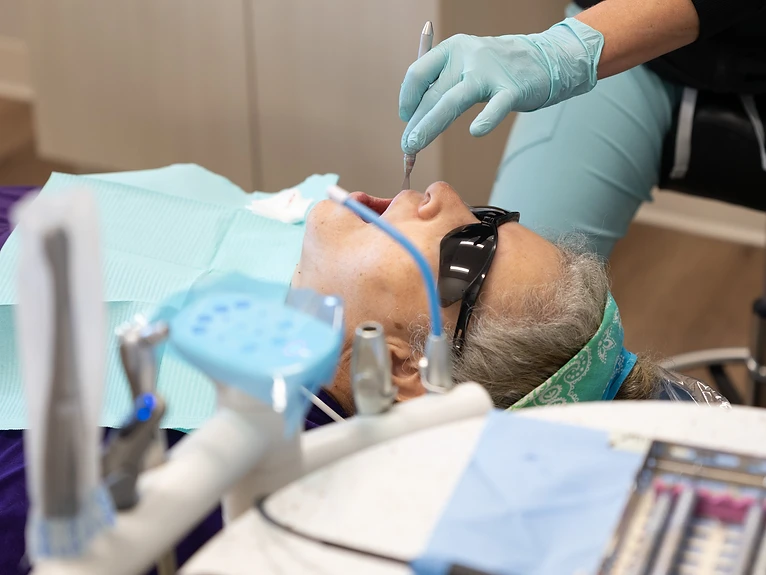
Same small group of faces every time, nothing rushed in the chair, and an honest plan for what comes next — that is what a cleaning here is built around.
Why people stay
The distinction that matters
Four cleanings, from healthy to gum disease
Your gum measurements decide which one you need. Not every mouth is fully healthy or fully in disease — two of these appointments cover the middle ground.
In between
Both of these can go slightly below the gumline — just not as deep as a deep cleaning.
Gingivitis cleaning
Teeth aren't healthy, but there's no irreversible bone loss yet. This sits between a regular cleaning and a deep cleaning. Sometimes we use a topical numbing medication — one without needles — to keep you comfortable. When gum tissue is inflamed and irritated, it is painful, but the only way to make it feel better is to do the cleaning.
Periodontal maintenance
Teeth have been affected by irreversible bone loss (gum disease — periodontitis), but things have stabilized. These cleanings are usually done more often — every three months — without anesthetic. We like to tell patients you will always have gum disease; it's just a matter of whether it's stable and “dormant” or actively progressing.
If gum health is the issue, our periodontal care page explains that side in full.
Your visit
What a cleaning here involves
Here is exactly what happens, from the conversation to what you hear at the end.
- 01
Step 01 · The conversation
Before any instruments come out
Your hygienist asks how things have been going — anything sensitive, anything bleeding, anything that has changed since we last saw you. If you have a specific worry, this is the moment to say so, because it shapes the rest of the appointment. You will see the same small group of faces over the years, so these conversations get shorter and more useful over time.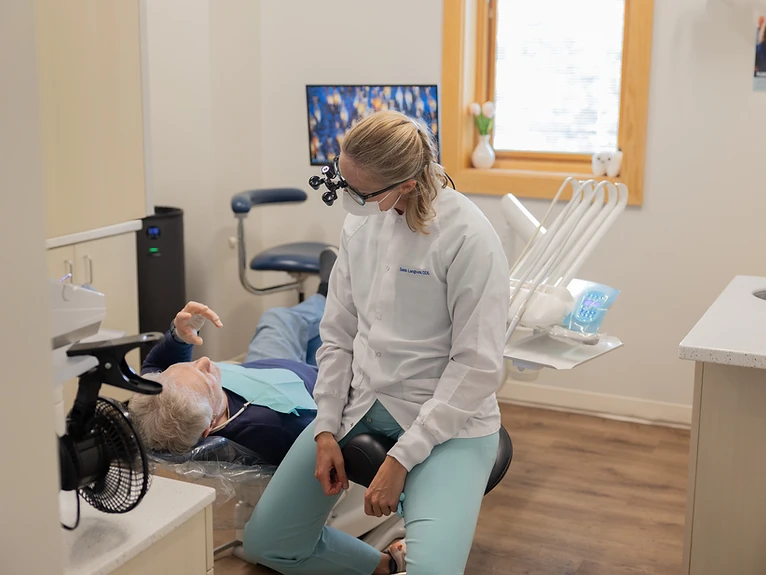
- 02
Step 02 · Plaque and tartar
Removing what brushing can't
Plaque is the soft film that builds up daily and that brushing and flossing can handle. Tartar is plaque that has hardened onto the tooth — once it is there, no amount of brushing will remove it. That is the part we take care of, above the gumline and just below it, using hand instruments and an ultrasonic scaler. Most of a cleaning is this: quiet, methodical work.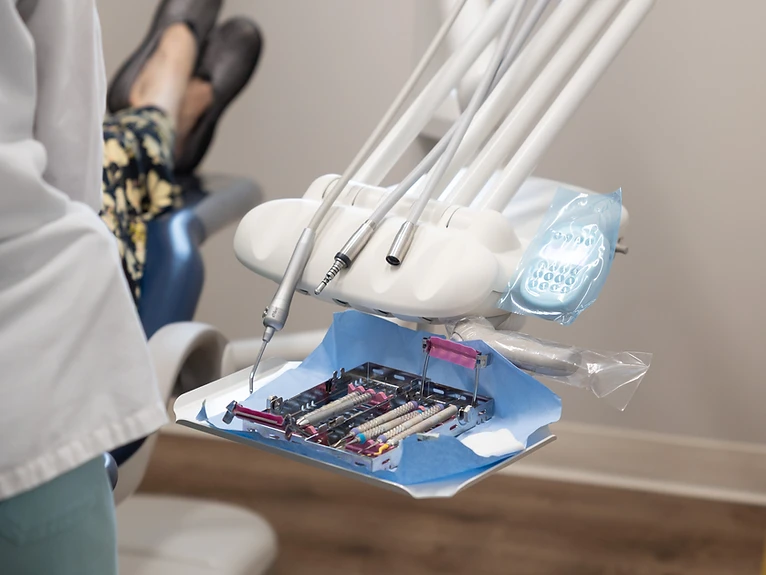
- 03
Step 03 · Polishing and flossing
Smooth surface, clear spaces
Polishing smooths the tooth surface and lifts surface stain from coffee, tea, and red wine. We finish by flossing — partly to clear anything loosened during the cleaning, and partly so your hygienist can feel how the spaces between your teeth are actually doing.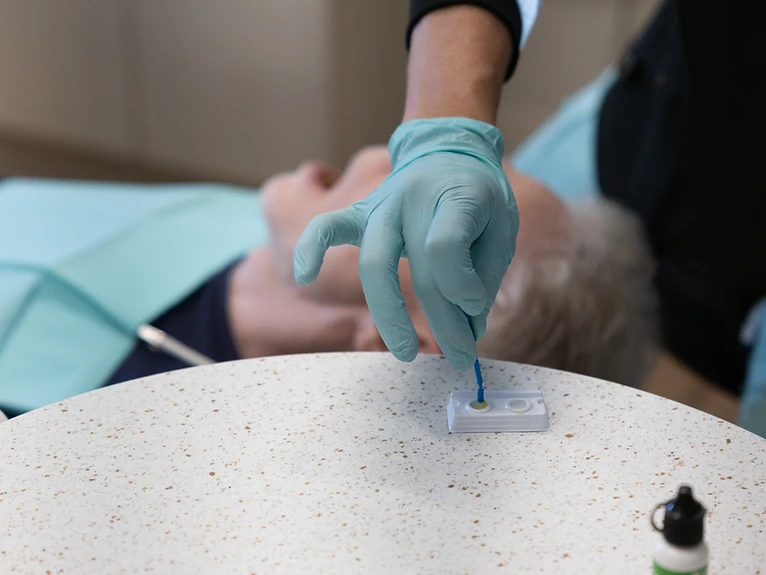
- 04
Step 04 · What you hear at the end
Specific and small, not a list of everything
You will hear what looked good, what to keep an eye on, and one or two specific things to change if there is something worth changing. If we spot something that needs Dr. Langhorst's eyes, we tell you plainly — whether it needs attention now or is worth watching.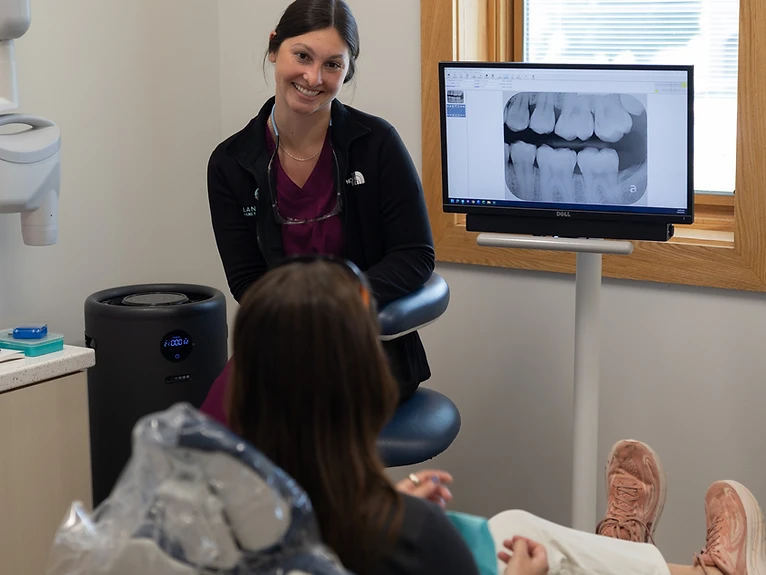


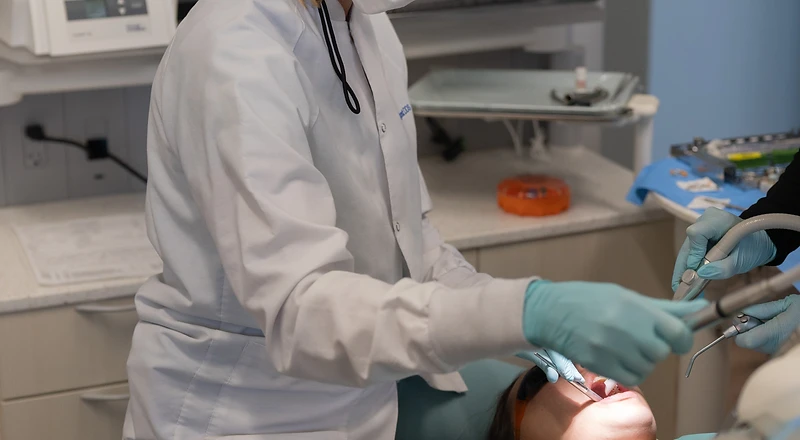
Most of a cleaning is quiet, methodical work — and how long it takes depends mostly on how much has accumulated since your last visit.
If it has been a while
Some of the people we see have not had a cleaning in five years, or ten. A few have avoided dentistry for decades because of something that happened in a chair a long time ago.
We are not going to lecture you — it does not help, and honestly it is why some people stopped coming in the first place. What we will do is tell you the truth about what we find, in the order it matters, and give you a realistic path forward. Sometimes that means everything at once; often it means starting with the most important thing and taking the rest in stages you can manage.
One thing worth knowing: after a long gap, a single appointment sometimes is not enough to get you back to a healthy baseline. If that turns out to be the case, we will explain why before we schedule anything.
Comfort
If your teeth are sensitive
Tell us. There is more we can do about it than most patients expect.
Tell us first
Sensitivity during a cleaning is common. Saying so at the start lets your hygienist adjust before anything is uncomfortable.
We adjust as we go
Shorter stretches, a different technique, a topical numbing gel, or simply slowing down — there is more we can do about it than most patients expect.
You can stop, anytime
We do offer nitrous oxide for comfort, but we don't offer deep or IV sedation — and for a routine cleaning, it's almost never what someone actually needs. What people usually need is to know they can ask us to stop.
Setting expectations honestly
What a cleaning will and won't do for the color of your teeth
One of the most common quiet disappointments in dentistry — worth setting straight. Click each box to see what a cleaning does, and what it leaves to a different conversation.
A cleaning will
Click here
A cleaning won't
Click here
If what you want is a smile that shows more of your teeth — not just whiter ones — our whitening page starts there.
Cadence
How often you should come in
Twice a year is the right answer for most people. It is not a universal rule.
Twice a year
The right interval for most healthy mouths, and it lines up with how most dental plans are structured.
Three or four months
Sometimes better for patients with a history of gum disease, fast tartar buildup, gum tissue inflammation (gingivitis), or conditions like diabetes.
We explain why
If we recommend a shorter interval for you, we will explain the reasoning rather than simply putting it on the schedule.
Costs & coverage
What a cleaning costs
We will tell you the cost before your appointment, and we are glad to verify your benefits ahead of time so the number you hear is as close to exact as we can make it. Payment is due at the time of service, and we will bill your insurance for you either way.
One thing worth knowing in advance, because it catches people off guard: a service listed as “100% covered” means 100% of what your plan considers a normal fee — and every office’s fees are different. Occasionally that leaves a small balance. We would rather tell you that now than have it show up in the mail.
Verified before you sit down
We verify your benefits ahead of time and give you the number up front — then you decide. More on how billing works, including what changes out of network, on our insurance and payment page.
Start a conversation
If you are due for a cleaning, or overdue, or not sure, reach out and we will sort it out with you. Call or text 616-377-7708 and a real person will get back to you. You can also reach us through our contact page.
FAQ
Frequently asked questions
Still wondering something? Call or text 616-377-7708 — ask whatever you want to ask first.