Cosmetic, Sleep & TMD
Night Guards & Bite Splints
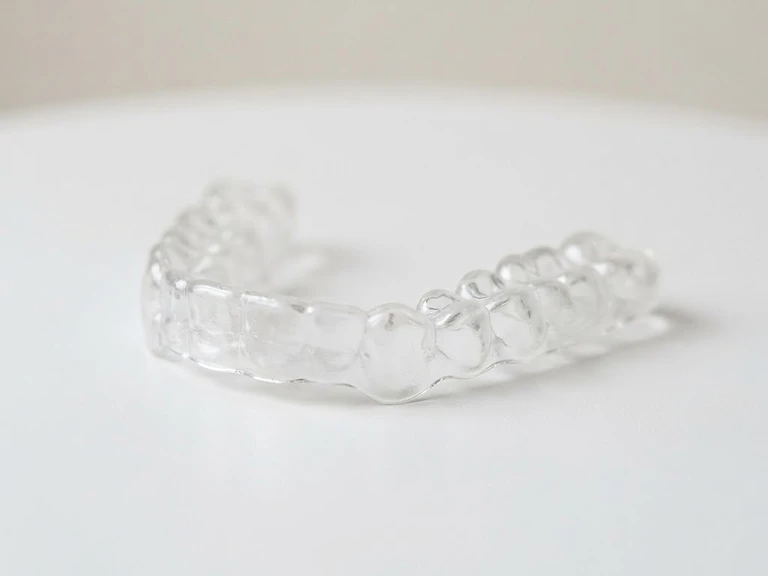
A worn edge on a tooth, a cracked filling that shouldn't have cracked, or a jaw that feels sore in the morning are all things that quietly point to one of the more common things we treat: clenching or grinding, often happening while you sleep and without you ever realizing it. A custom night guard, sometimes called a bite splint, is a simple appliance worn while you sleep that protects your teeth and eases the strain on your jaw. What makes this more than just a protective mouthpiece is what the wear pattern itself can tell us. The way your teeth are worn down isn't random, and reading it carefully sometimes points us toward something worth a closer look beyond just the grinding itself.
What your wear can tell us
Reading the wear pattern
Not all grinding wears teeth down the same way. Toggle between the two common patterns to see what the difference can point to.
A fairly typical pattern associated with general clenching and grinding. The biting edges of the teeth wear down from side-to-side force. A night guard protects the teeth and eases jaw strain.
Beyond the wear
What clenching and grinding can do over time
The worn surfaces are the most visible sign, but the force behind them affects more than the enamel.
Bone support
The constant force can accelerate bone loss around the teeth, making periodontal disease harder to manage and the teeth less stable over time.
Recession
Gum tissue can pull away from the teeth in response to the pressure, exposing root surfaces and increasing sensitivity.
Cracking
Sustained clenching and grinding can crack teeth or existing restorations, sometimes requiring crowns or even extraction if the crack reaches the nerve.
Mobility
The bite trauma can loosen teeth as the supporting ligaments and bone are stressed, a problem that worsens the longer it goes unaddressed.
The short version
Five things worth knowing
If you read nothing else on this page, read these.
What a night guard is
A custom-made appliance worn during sleep to protect your teeth and ease strain on your jaw from clenching or grinding.
Why it happens
Grinding and clenching are common and can come from a number of sources, including stress and changes in how your teeth fit together over time.
What wear tells us
The specific pattern of wear on your teeth can give us useful information, not just that grinding is happening, but sometimes clues about what's driving it.
Custom to your bite
A properly fitted night guard is custom to your bite, not a generic or one-size-fits-all appliance.
We connect the dots
If your wear pattern or symptoms suggest something worth exploring further, whether that's your bite, your jaw joint, or even your sleep, we'll bring it up as part of the same conversation.

Going deeper
What causes clenching and grinding
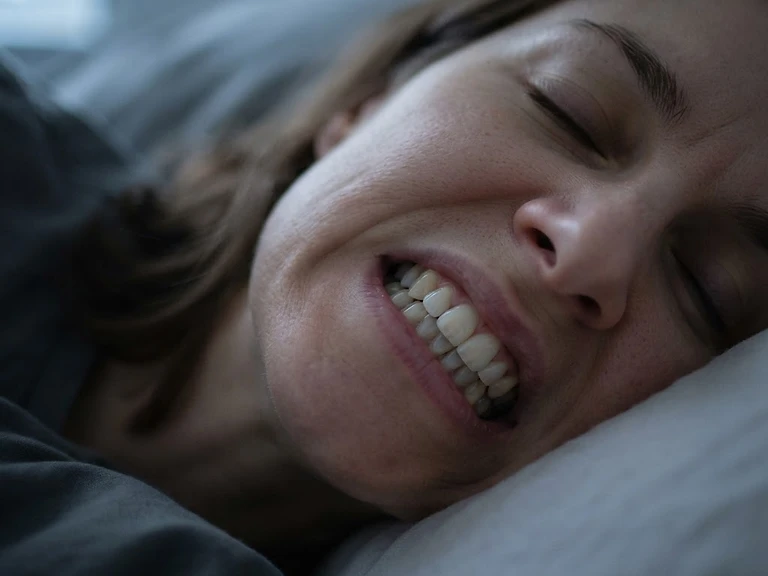
Clenching and grinding, sometimes referred to together as bruxism, can come from a few different places. Stress is a common contributor, since a lot of people clench or grind without any awareness of it, especially during sleep.
Changes in how your teeth fit together can also play a role, including cases where orthodontic treatment has relapsed over time and teeth no longer meet the way they once did, leaving the jaw subconsciously searching for a bite that feels settled and correct.
Why a custom-fitted bite splint is worth it
You can buy a mouthguard online or at a pharmacy for a fraction of the cost, so it's fair to wonder why a custom bite splint is worth the investment. The difference comes down to fit, materials, and what the appliance is actually doing while you wear it.
A boil-and-bite or one-size guard is a soft, generic cushion. It can protect the enamel to a degree, but it doesn't account for how your teeth actually meet, and soft material can actually encourage more clenching rather than less. A custom bite splint is precision-fit to your exact bite from a digital scan or impression, made in a dental lab from durable hard acrylic, and adjusted in the office so your jaw settles into a relaxed, even position rather than searching for one.
That precision is what protects more than just the teeth. A well-made splint distributes the force of grinding evenly, eases strain on the jaw joint and muscles, and is designed to last years rather than weeks. It is the difference between a mouthguard that absorbs damage and an appliance that helps correct the underlying problem.
Going deeper
How a night guard is made
A night guard starts with an impression or digital scan of your teeth, so the appliance fits your bite precisely rather than being a generic mouthguard.
Once it's ready, we check the fit carefully to make sure it's comfortable and doing its job, protecting your teeth from the wear and force of clenching or grinding while you sleep, and easing strain on your jaw muscles and joint.
The bite built into the guard is the part that matters most. We design and adjust for a very specific bite — one that gives you a "perfect" bite when you're wearing it, evenly distributing the pressure across all your teeth at once while taking the forces off your jaw joint. It's worth being honest about what that does and doesn't do: the guard doesn't stop you from clenching and grinding, but the way it's built prevents you from generating as much force when you do.

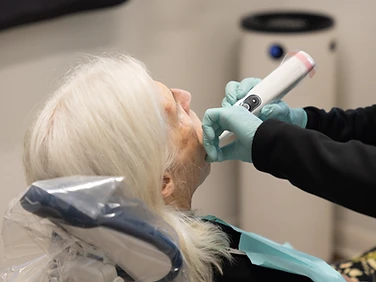
A digital scan captures the bite precisely.

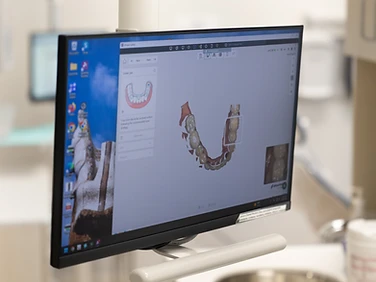
The resulting 3D model guides the custom fit.
How this connects to TMD
Clenching and grinding are common contributors to TMD, the broader category of jaw joint and muscle disorders we treat. A night guard is often one piece of a larger approach to managing TMD symptoms, alongside other steps depending on what's driving your particular case.

What to expect
What to expect at your visit
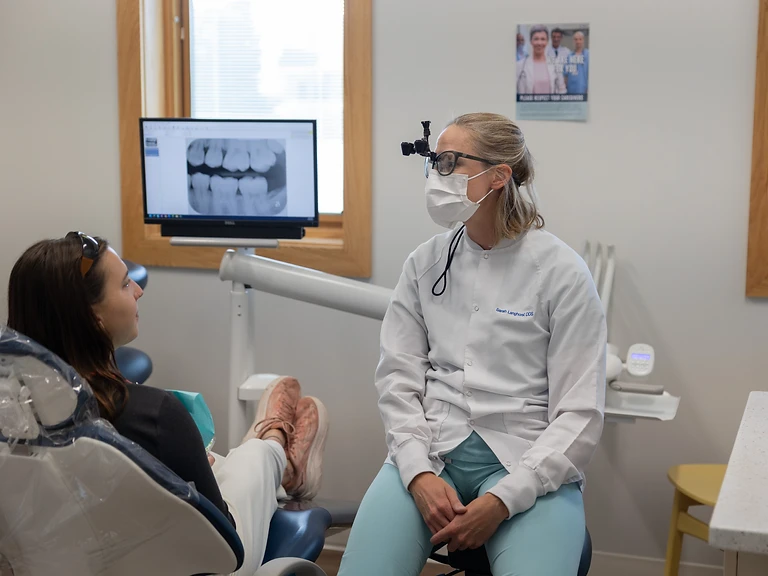
We'll take a close look at your teeth and the pattern of any wear we're seeing, ask about symptoms like jaw soreness or morning headaches, and talk through whether a night guard, along with anything else worth exploring, makes sense for you.
More on what a first visit looks like on our new patients page.
Related pages
Where to go next
TMD Treatment
Clenching and grinding are common contributors to TMD. A night guard is often one piece of a larger approach.
Read moreSleep Apnea & Oral Appliances
A forward wear pattern can sometimes signal sleep-disordered breathing.
Read moreDental Exams
Routine exams are where wear patterns often get noticed first.
Read moreNoticing worn teeth, jaw soreness, or morning headaches?
Call or text us at 616-377-7708. We're glad to take a look. You can also reach us through our contact page.