Replacing & Restoring Teeth
Dental Bridges
A missing tooth leaves more than an empty space. It can affect how you chew, how your bite lines up, and even how the teeth around it start to shift over time. A dental bridge fills that gap with a custom-made replacement tooth, anchored in place using the healthy teeth on either side.

Going deeper
How a bridge actually works
A bridge is essentially a few crowns joined together as one piece. Click each part to see what it does.
Pontic (replacement tooth)
The replacement tooth that spans the empty space. It is connected to the anchor crowns on both sides as one solid piece, so there is nothing coming in and out.
Spans the gapThe short version
Five things worth knowing
If you read nothing else on this page, read these.
- 01
Fills the gap
A custom-made replacement tooth anchored to the natural teeth on either side of the space.
- 02
Needs healthy neighbors
A good option when the teeth next to the gap are strong enough to support it.
- 03
Like crowns, joined
Preparing the neighboring teeth is similar to preparing for a crown, then the bridge is placed as one connected piece.
- 04
Fixed, not removable
Once it is in, a bridge stays in your mouth permanently, not removable like a partial denture.
- 05
Different from an implant
An implant replaces the root directly. Which makes sense depends on your neighboring teeth and what matters most to you.
It doesn't have to stay this way
The gap, the discoloration, the shift — a bridge can quiet all of it
A missing tooth leaves a visible gap, and the teeth around it can begin to darken, drift, or tilt into the empty space over time. None of that has to be permanent. A bridge fills the gap with a custom replacement tooth anchored to the healthy teeth on either side, so the space closes, the discoloration is hidden, and your smile reads as complete again — fixed in place, not something you take in and out.
The gap closes
A custom replacement tooth spans the empty space, so the gap is no longer the first thing you see.
The discoloration is hidden
The replacement tooth is matched to your smile, so the dark, empty socket no longer shows through.
The shift is stopped
Neighbor teeth are held in place by the bridge, so they stop drifting into the space over time.
Learn more about dental implant restorations and how they compare.
A bridge uses what is already there. An implant starts from the root.
Two paths, one gap
A bridge can also sit on implants
A bridge does not have to be anchored to natural teeth. If the teeth next to a gap are not strong enough to support one, or are missing entirely, we can replace a few teeth by placing two implants and spanning a bridge between them, rather than between teeth. The idea is the same — a connected replacement that stays fixed in place — but the support comes from implants instead of natural teeth.
This is also, on a larger scale, exactly how a fixed implant denture works: a full arch of teeth secured to a series of implant posts as one connected bridge. More on that on our fixed implant dentures page.
What the process generally looks like
From preparing the teeth to placing the bridge
The process usually involves preparing the neighboring teeth, wearing a temporary, then placing the finished bridge as one connected piece.
- 1
Visit 1
Prepare the neighboring teeth
We start by shaping the teeth on either side of the gap the same way we would for a crown, then take measurements or a digital scan so your custom bridge can be made to fit precisely.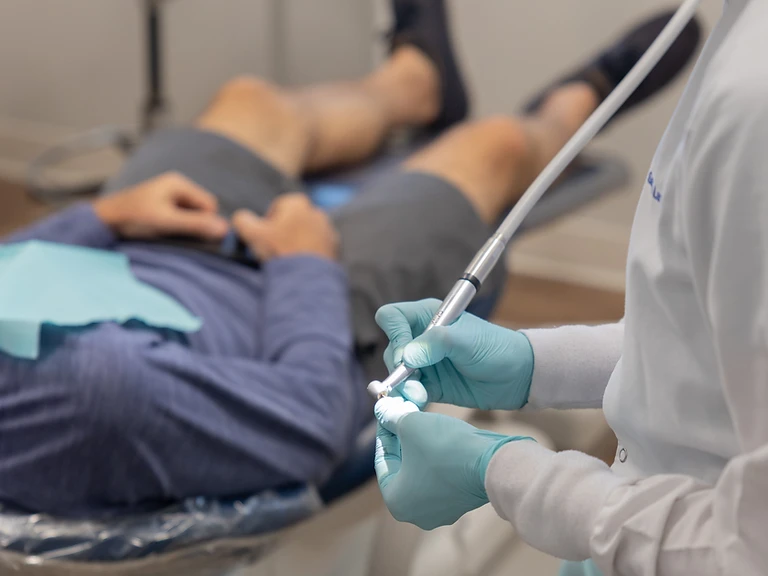
- 2
In between
A temporary bridge protects the gap
You wear a temporary bridge while the final one is being custom-made, so the gap stays covered and the prepared teeth stay protected in the meantime.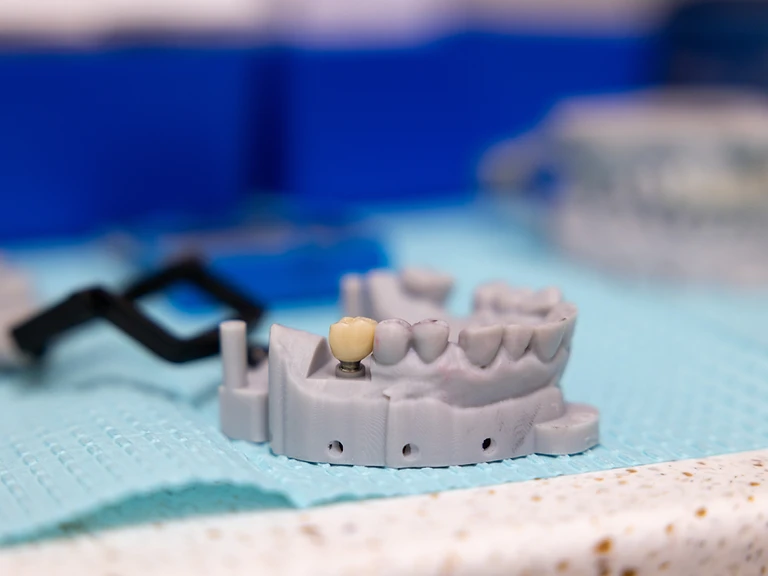
- 3
Visit 2
Place the finished bridge
We check the fit and bite carefully before cementing the finished bridge into place as one connected piece. From there, it stays fixed in your mouth.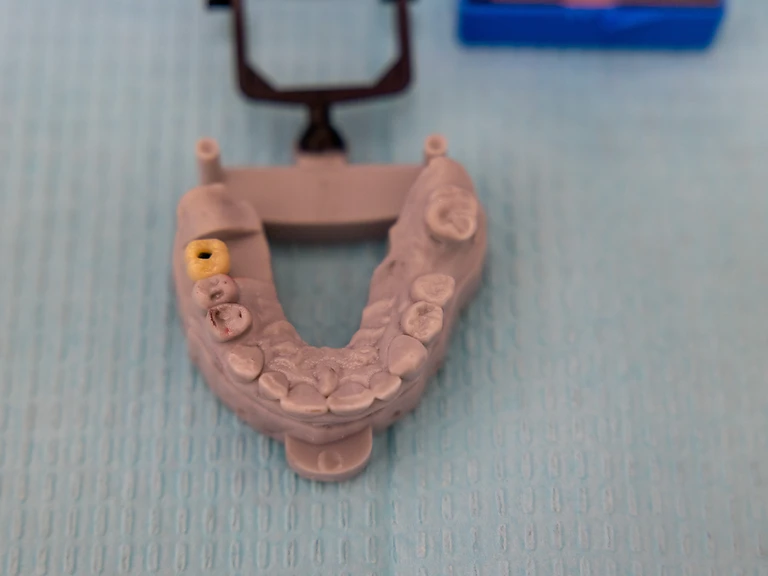
- 4
After
Cared for like the rest of your teeth
It is cared for like the rest of your teeth, with special attention to cleaning underneath the connected section, which we will show you how to do.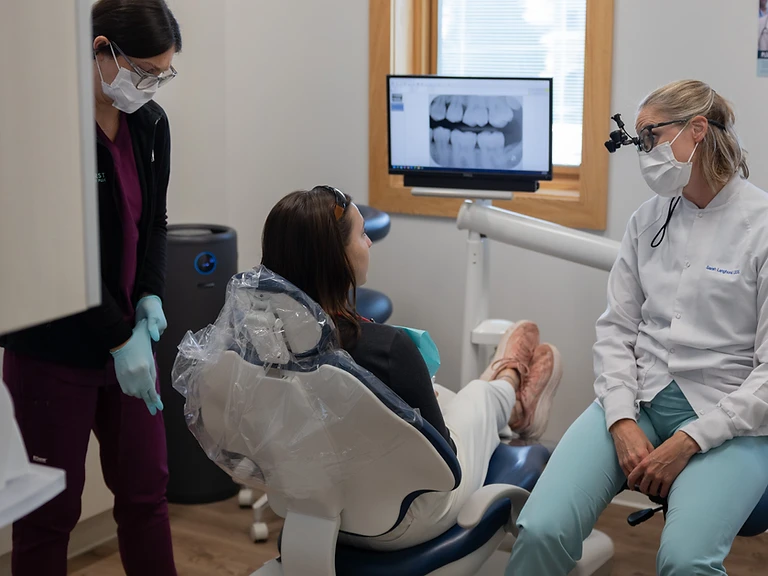


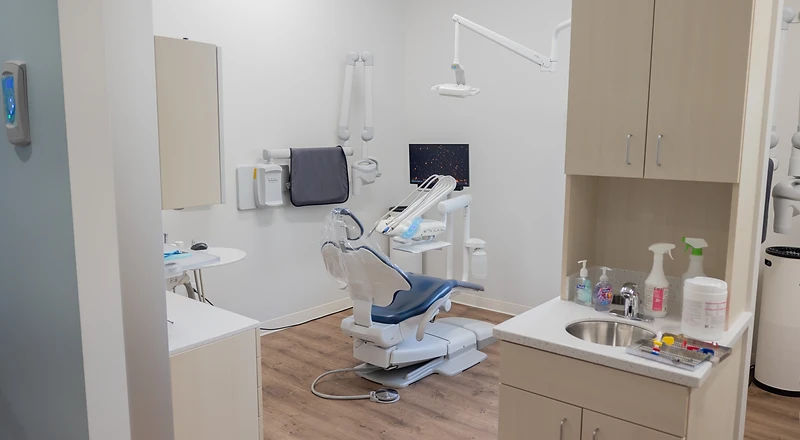
A bridge is a solid, time-tested option that stays in your mouth, becoming part of how you chew, bite, and smile every day.
Caring for a bridge long term
Because a bridge relies on the health of the teeth supporting it, keeping those teeth and the gum tissue around them healthy really matters. We will check your bridge at regular visits and let you know if anything needs attention, so it can keep doing its job for years.

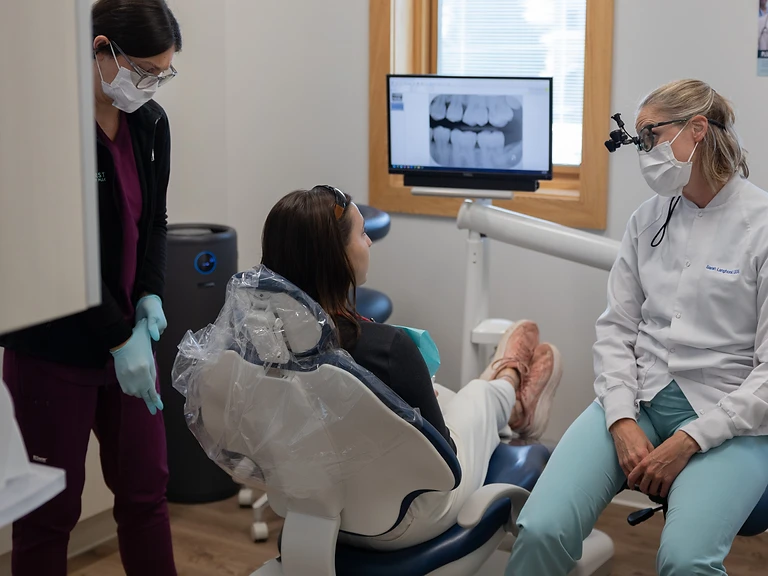
What to expect
A close look before we recommend anything
We will take a close look at the gap and the health of the teeth around it, and talk through whether a bridge, an implant restoration, or another option fits your situation best, before we recommend anything.
More on what a first visit looks like on our new patients page.
Related pages
Missing a tooth and not sure what to do about it?
Call or text us at 616-377-7708. We will help you sort through your options, whether that is a bridge, an implant, or something else. You can also reach us through our contact page.