Replacing & Restoring Teeth
Implant-Supported (Snap-In) Dentures
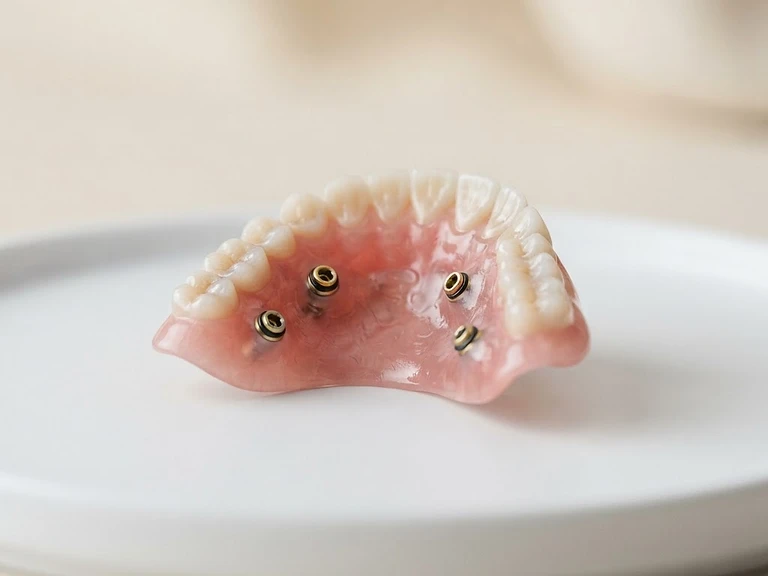
If a traditional denture feels loose or unpredictable, but a permanently fixed option feels like more than you are looking for, there is a middle path. An implant-supported denture attaches to a small number of implant posts, snaps securely into place, stays put while you eat and talk, and you remove it yourself for cleaning. It is supported by both the implants and the underlying gum tissue and bone.
Going deeper
The difference a snap makes
The same denture, anchored instead of resting loose, changes what your day feels like.
A denture that moves
Denture shifts and rubs while you eat or talk
Paste or adhesive to keep it in place
Sore spots where the base presses on the gums
A growing list of foods you avoid
A denture that snaps in
The posts help to support the denture to reduce movement
Gum irritation is still possible, but less movement means less irritation
You still can't eat everything, but you get confidence without adhesive
The short version
Five things worth knowing
If you read nothing else on this page, read these.
Snaps securely into place
The attachments are not built-in — they are ones we order and place, sometimes called “pick-up” attachments. There are different types for different circumstances.
Still removable
You remove it yourself for cleaning, the same as a traditional denture. This helps keep things easy to clean if dexterity is a concern.
Two providers, one plan
The implant posts are placed by a specialist. We design and fit the denture, secure the attachments, and handle the ongoing care and adjustments.
Fewer implants
It generally requires fewer implants than a fully fixed restoration, because it also relies on soft gum tissue and your muscle coordination for stability — which can make it a more accessible option for some patients.
Depends on your bone support
This choice depends on your bone support. You need good bone and gum tissue to make it a good option — if we relied only on the implants and not the gum and bone, the implants could become overloaded and fail.
Where it sits
Where it sits on the denture spectrum
Replacing a full arch of teeth is not a single decision with one right answer. It is a spectrum of options, each with real tradeoffs. Click each option to see how it compares.
Implant-Supported (Snap-In)
Anchored to a smaller number of implants and pops in and out. More stability than a traditional denture without being permanently fixed.
- Comes out?
- Pops in and out
- Stability
- Anchored to a few implants
- Cleaning
- Remove to clean
- Feels like
- A middle ground
Placement and restoration
Working together, seamlessly
The implant posts that a snap-in denture attaches to are placed by a specialist, the same coordinated approach we use for any implant-based treatment. Once the posts have healed, we design and fit the denture and its attachments, and handle adjustments and maintenance from there.
The Specialist
Places a small number of implant posts in your jawbone. This is the surgical step that creates the anchors the denture will attach to.
Langhorst Family Dentistry
Designs and fits the denture and its attachments to the healed posts, and handles adjustments and maintenance from there.
We coordinate the handoff so it feels seamless on your end, even though it involves more than one provider.
The process
What the process generally looks like
After a thorough evaluation, the specialist places a small number of implant posts. Once they have healed, we take measurements and design a denture built to attach securely to those posts. From there, it is a matter of fitting, checking your bite, and making sure everything feels right before you leave. It is worth knowing that the full process takes time — dentures themselves often take around two months to make — so you will typically wear a temporary denture during the healing period.
- 1
Evaluation
Thorough evaluation
After a thorough evaluation of your jawbone and your current situation — whether you already have a denture or are starting from missing teeth — we determine whether a snap-in denture is the right fit and plan the placement of the posts.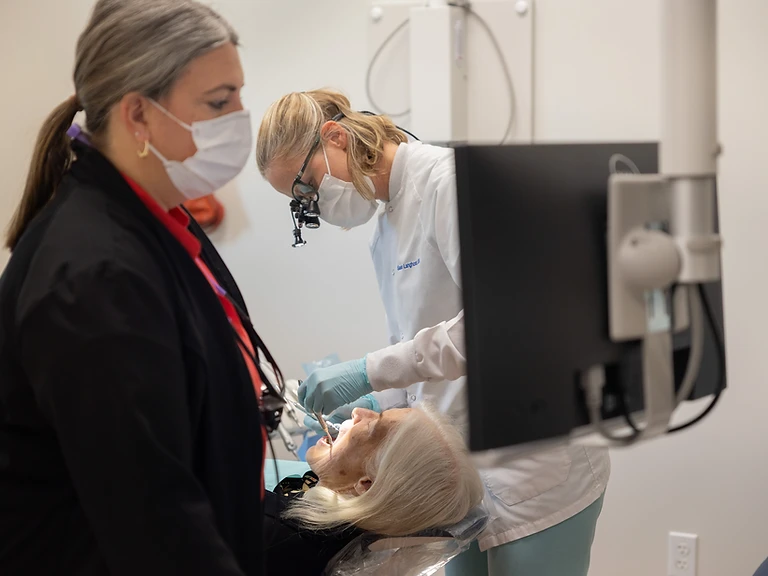
- 2
Surgery
Surgical placement
The specialist places a small number of implant posts in your jawbone. We coordinate this step so it feels seamless on your end.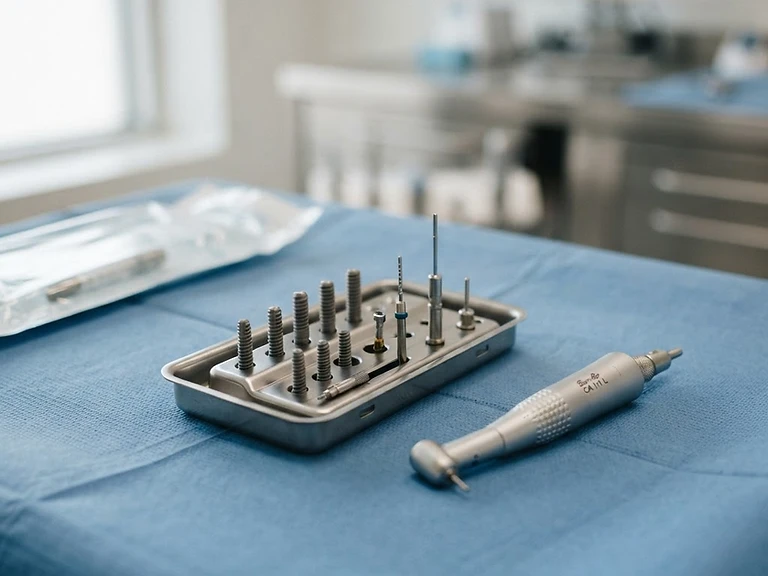
- 3
Healing
Healing and integration
The posts integrate with your jawbone over a healing period, typically a few months. During this time, you will typically wear a temporary denture of some kind so you are not without teeth. This integration is what gives the posts their stability.
- 4
Fitting
Design and fitting
We take measurements and design a denture built to attach securely to the posts. From there, it is a matter of fitting, checking your bite, and making sure everything feels right before you leave.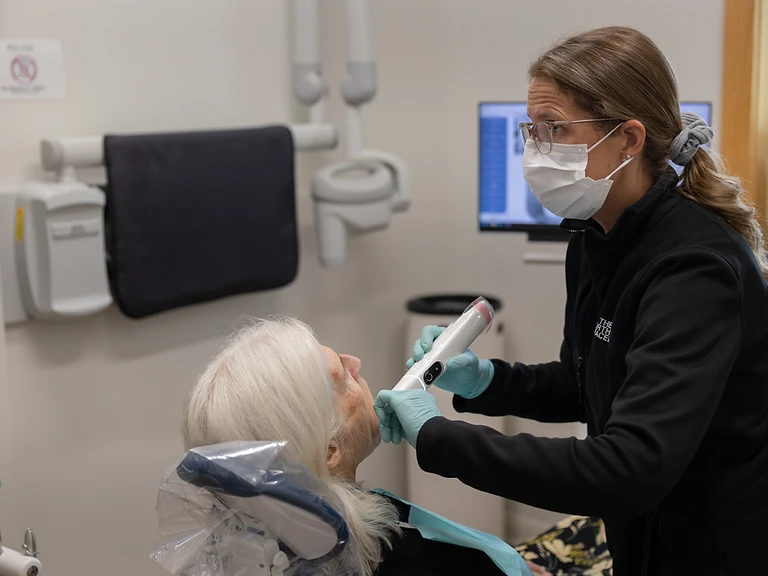


It solves the biggest frustration patients have with traditional dentures, movement and unpredictability, without requiring the bigger step of a fully fixed restoration.
Who tends to choose this option
Patients who choose a snap-in denture are often people who have struggled with a traditional denture slipping, especially the lower denture, which tends to be the harder one to keep stable. It is also a good option for patients with dexterity concerns, since removing it for cleaning and maintenance is easier than caring for something permanently fixed.
In fact, an implant-supported lower denture is the current standard of care — a conventional, fully removable lower denture is considered sub-standard and is not something we would recommend.
It is worth choosing carefully, though. Shifting between a snap-in and a fully fixed denture later on is challenging, because the implants have to be placed differently depending on which option you are planning for.

What to expect
A conversation about where this fits
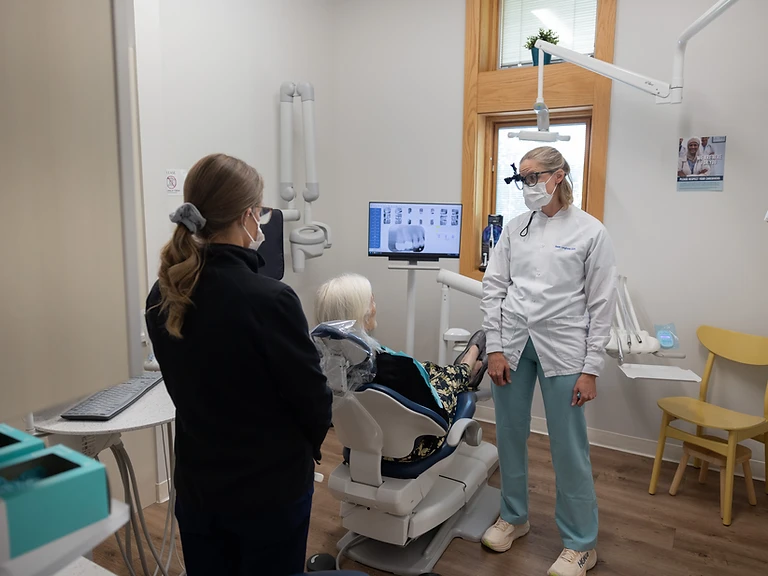
We will talk through your current situation, whether that is an existing denture that is not working well or a full arch you are planning to replace, and walk through where a snap-in denture fits among your other options.
More on what a first visit looks like on our new patients page.
Related pages
Tired of a denture that moves around?
Call or text us at 616-377-7708. We are happy to talk through whether a snap-in denture could help, with no pressure to decide anything on the spot. You can also reach us through our contact page.