Replacing & Restoring Teeth
Partial Dentures
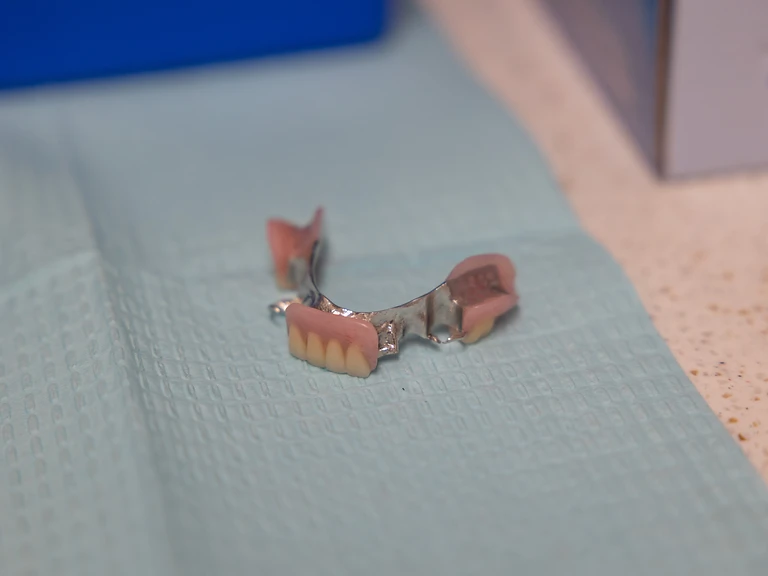
When you are missing several teeth, but not all of them, a partial denture is one of the ways we can restore your smile and your bite. It is a custom-made, removable appliance that fills the gaps left by missing teeth while working alongside the natural teeth you still have, using clasps or precision attachments to stay securely in place. It can be a great fit when several teeth throughout your mouth need to be replaced, but a bridge or an implant is not the right tool for every gap, or is not the direction you want to go. It is a flexible option that can be adjusted over time as your needs change.

The short version
Five things worth knowing
If you read nothing else on this page, read these.
Replaces several teeth at once
A partial denture replaces several missing teeth at once using a removable appliance that clasps onto your remaining natural teeth for support.
Different from a bridge
It is different from a bridge, which is fixed in place and typically replaces a smaller number of missing teeth using the teeth right next to the gap.
Different from a conventional denture
It is also different from a conventional denture, which replaces an entire arch when no natural teeth remain.
A few visits
The process usually involves a few visits: impressions and measurements, a fitting to check comfort and appearance, and adjustments once the final piece is ready.
Adjustment and follow-up
Like any removable appliance, it takes a bit of adjustment at first, and we are here for follow-up visits to make sure it feels right.
Going deeper
How it is different from a bridge or a conventional denture
A partial denture sits in the middle of the spectrum between a bridge and a conventional denture. A bridge is fixed permanently in place and generally makes the most sense for a smaller gap. A conventional denture is for a mouth with no remaining natural teeth. A partial denture is built for mouths with several missing teeth, but where healthy natural teeth remain to support the appliance. Click each option to compare.
Partial Denture
A custom, removable appliance that fills the gaps left by several missing teeth while working alongside the natural teeth you still have.
- How many teeth?
- Several, throughout the mouth
- Removable?
- Yes, removable
- Uses natural teeth?
- Clasps onto remaining teeth
- Feels like
- A flexible middle ground
How it stays in place
Clasps, precision attachments, or implant snaps
A partial denture most often uses clasps, or in some cases more discreet precision attachments, that connect to your remaining natural teeth to hold the appliance securely while you eat and talk — and that can even attach to implants.
Clasps
Clasps connect to your remaining natural teeth to hold the appliance securely while you eat and talk. The design is custom to your mouth, taking into account which teeth remain and where the gaps are.
Precision attachments
In some cases, more discreet precision attachments can be used instead of visible clasps, for a more natural look. We will talk through which option makes the most sense for your situation.
Implant snaps
Sometimes we place implants and use their attachments as the snaps that support a partial denture, giving it a more secure fit than clasps alone. This can be a good option when the remaining natural teeth are not strong candidates to clasp onto, or when added stability would make wearing the appliance more comfortable.
The process
What the process generally looks like
We start with a thorough evaluation, design a partial denture custom to your mouth, try it in to check fit and appearance, and make adjustments once the finished piece is ready. As with any new removable appliance, some getting used to it is normal, and we will see you for follow-up visits to fine-tune the fit.
- 1
Evaluation
Thorough evaluation
We start with a thorough evaluation of your remaining teeth and the gaps that need to be filled, along with impressions and measurements.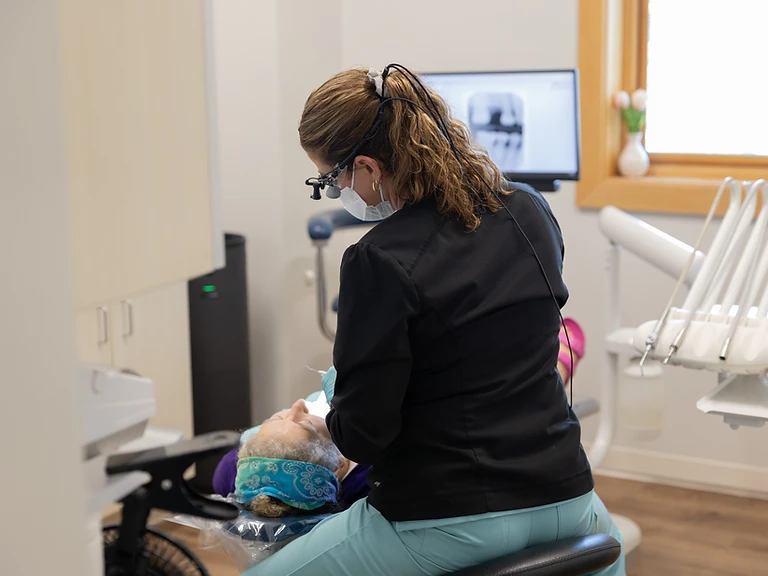
- 2
Design
Custom design
From there, we design a partial denture custom to your mouth, taking into account which teeth remain and where the gaps are, so it fits comfortably and functions well.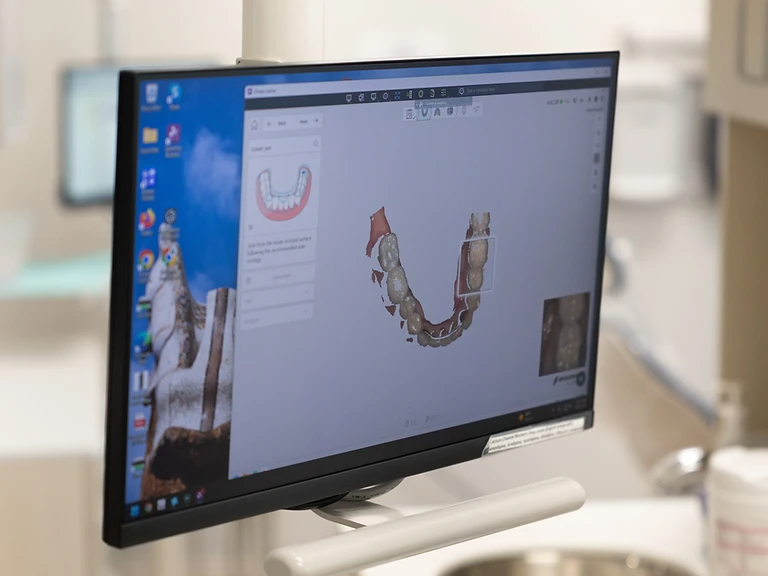
- 3
Try-in
Fitting and try-in
We try it in to check fit and appearance before anything is finalized, making sure it looks right and feels comfortable.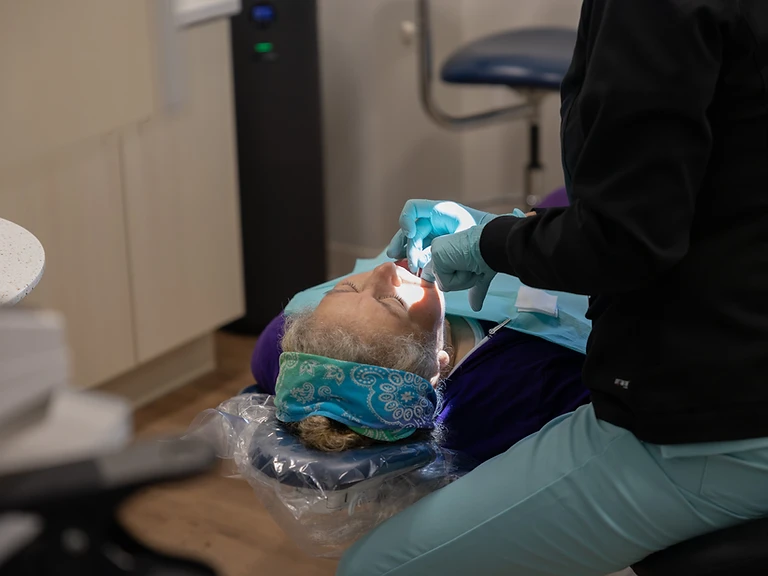
- 4
Adjustment
Final adjustments
We make adjustments once the finished piece is ready, and see you for follow-up visits to fine-tune the fit as you get used to wearing it.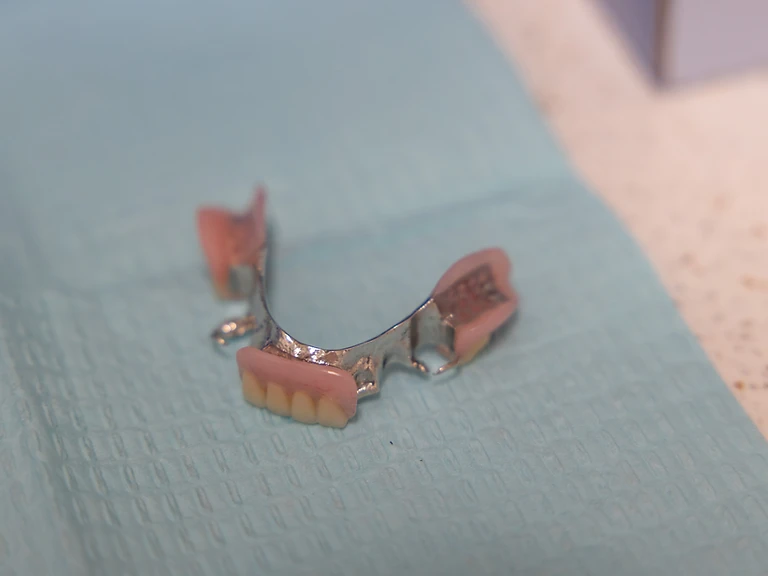


Those supporting teeth matter a lot to the long-term success of a partial denture, so keeping them healthy is part of taking care of the whole picture.
Partial dentures
Caring for a partial denture
A partial denture needs regular cleaning, along with routine checkups so we can keep an eye on both the appliance and the natural teeth it relies on for support. Those supporting teeth matter a lot to the long-term success of a partial denture, so keeping them healthy is part of taking care of the whole picture.

Flexibility
If your needs change over time
Tooth loss can progress over time, and a partial denture can sometimes be adjusted or remade as your mouth changes. If you eventually lose more teeth or want to explore an implant-based option instead, we are glad to talk through what makes sense at that point.
What to expect
What to expect at your visit
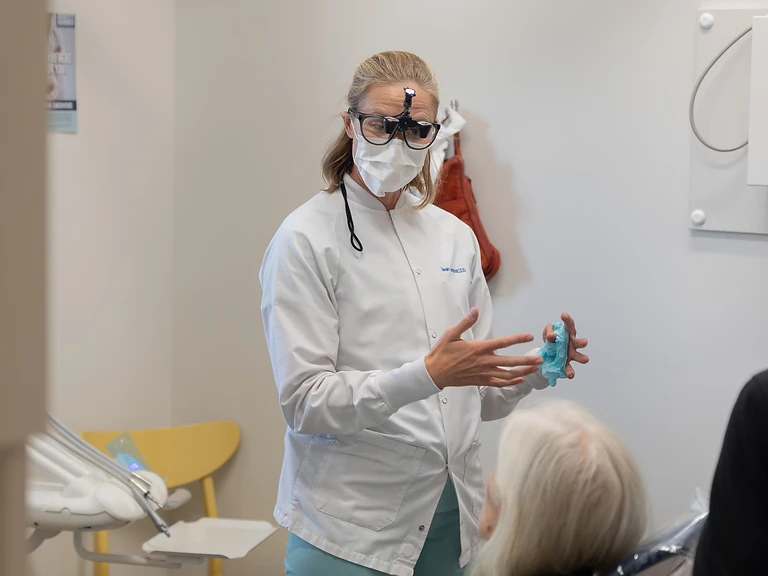
We will take a close look at your remaining teeth and the gaps that need attention, and walk through whether a partial denture, a bridge, or another option is the right fit before recommending anything.
More on what a first visit looks like on our new patients page.
Related pages
Missing several teeth and not sure what fits your situation?
Call or text us at 616-377-7708. We are happy to talk through your options, with no pressure to decide anything on the spot. You can also reach us through our contact page.